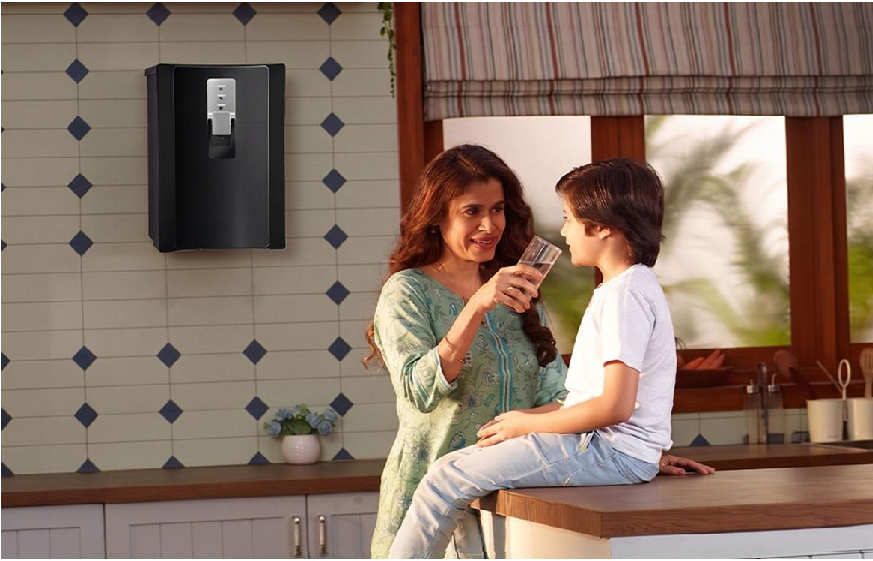
A water filter and a water purifier are often discussed as they are completely different things. In reality, filtration is often one part of the purification process. A water filter removes specific impurities depending on the filtration technology it uses. For example, a sediment filter can physically trap suspended particles such as dust, sediment, and rust, while activated carbon helps reduce chlorine, odour and some compounds that affect taste.
A water purifier, on the other hand, typically combines one or more filtration and purification technologies to address a broader range of water quality concerns. Depending on the system, these may include RO, UV and UF in addition to sediment filtration and activated carbon. Additionally, some advanced systems come with Active Copper Infusion and Alkaline Boost Technology.
The technology you need depends on your water. RO uses a semi-permeable membrane to reduce dissolved salts, TDS, and certain heavy metals and chemicals. UV uses ultraviolet light to inactivate bacteria and viruses, while UF provides fine membrane filtration for suspended particles and microorganisms. So, when looking at a water filter or comparing water filter price, the useful question is not simply how much it costs. It is what the particular technology is designed to address and whether it is sufficient for the quality of water entering your home.
How Water Filters Remove Common Impurities?
A water filter separates certain impurities from water as it passes through the filtration material. A sediment filter, for example, catches suspended matter such as dust, sand and rust. Activated carbon works differently. It can reduce chlorine, unpleasant odours and some compounds that affect taste.
Read More: What Should a Janitorial Supplies Program Include?
The main thing is that different filters perform different jobs. What a filter can remove depends on the type of filtration used, which is why a basic filter should not be expected to address every contaminant.
● Physical Filtration: Traps Sediment, Rust and Dust
Sediment or mechanical filtration catches particles suspended in the water. In a multi-stage purifier, this is also an important first step because it keeps larger particles from reaching the finer filtration and purification components.
● Activated Carbon: Improves Taste and Reducing Chlorine
Activated carbon uses adsorption to reduce chlorine, odour, and some taste-affecting compounds. It is useful for improving the quality of treated water, but it is not a substitute for technologies designed to deal with dissolved salts, high TDS, or microbial contamination.
● What a Basic Filter Cannot Remove
This is where the difference between filtration and a complete purification system becomes important. For example, a sediment or carbon filter is generally not designed to remove dissolved salts, high TDS or heavy metals, and it may not address bacteria and viruses. Similarly, different filtration technologies have different capabilities when it comes to microorganisms.
How Water Purifiers Handle Dissolved and Microbial Contaminants?
A water purifier combines different technologies because different impurities require different treatment methods. The perfect combination depends on the quality of the incoming water and the water purifier.
● RO Membrane: Reduces TDS and Dissolved Contaminants
Reverse osmosis (RO) passes water through a semi-permeable membrane that helps reduce dissolved salts, TDS, and certain heavy metals and chemicals. It is particularly useful when the incoming water contains a high level of dissolved impurities.
● UV Technology: Inactivates Bacteria and Viruses
UV purification treats water with ultraviolet light, which inactivates microorganisms such as bacteria and viruses. It does not reduce TDS or dissolved salts, so it serves a different purpose from RO.
● UF Filtration: Adds Another Fine Filtration Stage
Ultrafiltration (UF) uses a fine membrane to separate suspended particles and certain microorganisms. Unlike RO, it does not reduce dissolved salts or TDS. Its usefulness therefore depends on the water quality and the other stages in the purifier.
How Your Water Source Determines the Right Technology?
The water entering your home should guide the choice of filtration or purification technology. Municipal water may already have undergone treatment, although its quality can still vary during distribution and storage. Borewell and tanker water may contain higher levels of dissolved salts and minerals, making RO worth considering where TDS is high. Since TDS only measures the total amount of dissolved material and does not identify specific contaminants, it should be considered alongside the water source and an overall assessment of water quality before choosing a system.
Water Filter or Purifier: Which One Do You Need?
If your primary concern is improving taste, reducing chlorine or removing visible particles from already treated water, a suitable water filter may be sufficient. A sediment or carbon filter can address concerns such as suspended particles, sediment, chlorine, odour or taste, depending on the filtration technology. However, if your water has multiple concerns like high TDS, dissolved contaminants, or microbial concerns, a water purifier using multiple technologies like RO, UV, or UF may be more suitable.
Read More:How Commercial Water Filters Improve Water Quality and Business Efficiency
The useful starting point is not the number of stages or the water filter price. It is the quality of the water coming into your home and the contaminants you need the system to address.
If your water contains dissolved impurities, comes from borewells or tankers, or requires a more comprehensive purification process, a multi-stage water purifier may be worth considering. Such water purifiers combine sediment filtration, activated carbon, RO, UV and UF, depending on the water requirements and model. In simple terms, the difference is not always water filter vs. water purifier. A filter usually performs a specific filtration function, while a purifier may bring together multiple technologies to provide a more comprehensive treatment process.
Once you understand that, buying becomes much less about counting purification stages or comparing the water filter price, and much more about choosing a system that’s designed for the water your family drinks every day.