
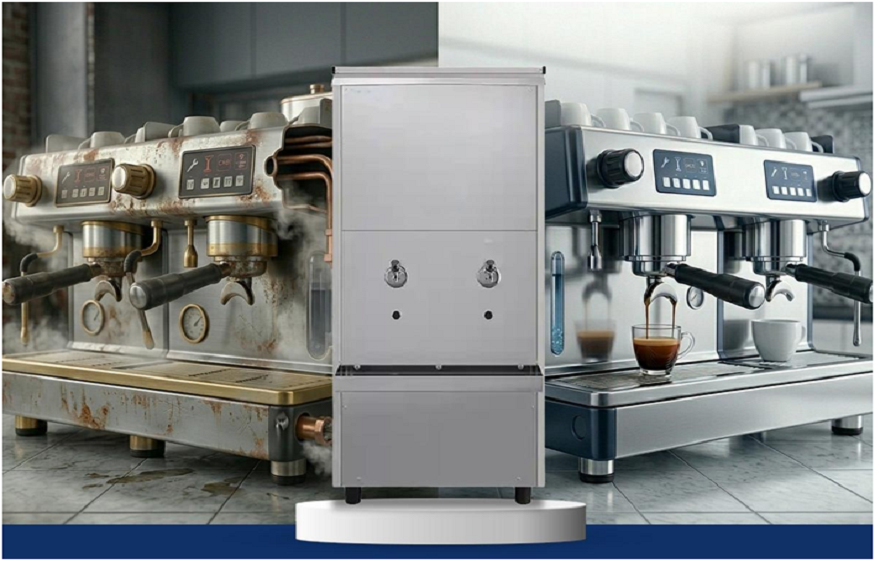
Water is one of those things that most businesses rely on every single day without a break. It flows through the kitchens and water coolers, yet rarely does anyone think about it in detail, until something starts to go wrong. It could be scaling in machines, inconsistent supply, different tastes, or rising maintenance costs.
In most cases, the root cause is often the water quality. This is where commercial water filters come into the picture, as they support daily business operations along with maintaining the hygiene requirements.
In this blog, we shall look at how commercial water filters improve water quality and its relation to business efficiency.
Why Water Quality Matters in Commercial Environments?
Commercial setups are usually places where footfall is always high. If the water quality is poor, it can lead to health issues, and if there is hardness in water, it can lead to scaling in equipment, blockages in pipelines and inconsistent output.
What do Commercial Water Filters Actually Remove?
- A sediment filter removes suspended particles, like dirt and dust.
- RO filter manages TDS levels and brings down the hardness in drinking water.
- UV/UF filters remove microbial or bacterial contamination.
- Activated carbon filters manage the odour or bad taste in water.
In most of the commercial spaces, these filtration methods are combined (commercial water purifiers with multi-stage filtration), allowing each one to handle a specific type of impurity and deliver clean and safe drinking water.
Read More: 5 Essential Pump Types Every Property Owner Should Know About
Link Between Water Filtration and Business Efficiency
Clean water helps in preventing scaling and clogging, which can extend the life of equipment such as coffee machines, dishwashers, and water heaters. When systems are exposed to fewer impurities, the frequency of repairs and servicing tends to decrease.
Reliable water quality ensures that processes run smoothly without unexpected interruptions. Also, in case of offices, where the workforce is around 100-120 people on a single floor, clean water will help maintain their health, which will then contribute to improved productivity and an efficient working environment.
In large organisations like hospitals or industries where the demand for water is continuous and heavy, RO plants are installed to sustain that demand. However, the RO plant price varies depending on the size of the organisation, usage and the level of purification required.
Conclusion
Commercial water filters are often seen as a basic necessity, but their impact is significant, which goes beyond just improving the water quality. They support smoother operations, reduce strain on equipment, and help maintain consistency across daily business activities.
Read More: Why Dublin Homeowners Trust Happy Clean for Premium Carpet Cleaning Services
When viewed as part of a larger operational system rather than a standalone product, water filtration becomes an important contributor to both efficiency and long-term reliability.




1 Comments