Selecting the right-sized generator is crucial for maintaining efficient and reliable power during outages or off-grid use.
An undersized generator can become overloaded, leading to potential damage and power failure, whereas an oversized generator may waste fuel, take up more space, and drive up costs. If you plan to use a portable solar charger for small devices or get a solar battery backup for home systems like a Jackery solar generator, you need to plan carefully.
To find a solution that meets your requirements, you must first ask yourself, “What size generator do I need?”
This article offers clear tips and real-life scenarios to help you determine the ideal generator size for your setup, ensuring you stay powered without unnecessary expense or hassle.
Understand The Basics: Watts, Volts, And Amps
To answer the question, “What size generator do I need?” It is essential to understand a few basic electrical terms: watts (W), volts (V), and amps (A). These values determine how much power your appliances and devices require, which in turn affects the size of the generator you will need.
● Watts (W)
Watts are used to measure a device’s total power consumption. They are the product of volts and amps (W = V × A). And when watts are multiplied by the operating time, the result is the energy consumption. Knowing the total wattage of all the appliances you want to run helps determine the right generator size.
●Volts (V)
● Amps (A)
Amps measure the electric current, which is the rate of flow of electric charge. You can tell that the higher the amp and the higher the volt an appliance needs to run on, the higher its wattage will be. This, in turn, means a larger generator is needed.
● Starting Watts vs. Running Watts
- Starting watts (also called surge watts) refer to the extra power needed to start electric motors or compressors (e.g., refrigerators and air conditioners).
Step 1: Identify What You Need to Power
Make a list of all the essential appliances, tools, or systems you want to run during a power outage or off-grid scenario. This may include the refrigerator, lights, HVAC system, microwave, and medical equipment for homes. For outdoor or worksite use, it could be power tools or charging stations.
Step 2: Find The Wattage Requirements
Look at the labels or manuals of each item on your list to find the wattage. If wattage is not listed, you can calculate it using the following formula:
Watts (W) = Volts (V) × Amps (A)
For example, a device using 120 volts at 5 amps would require 600 watts.
This step is critical when asking how to calculate the power needed for a house accurately.
Step 3: Calculate Total Running Watts
Add together the running watts of all the devices you plan to use simultaneously. Running watts represent the continuous power an appliance uses once it is operating. This total is your base load, which is the minimum output your generator should handle continuously.
Step 4: Account for Starting Watts
Some appliances, especially those with motors like refrigerators, freezers, and pumps, need additional power when they start. This is known as starting watts or surge watts. Identify the highest starting watt requirement from your list and add it to the total running watts to ensure your generator can handle initial loads without tripping.
This is a key factor when determining the right-sized generator to keep your home running smoothly.
Step 5: Add A Safety Margin
Once you have calculated your total power requirements, add a safety margin of 10–20%. This buffer helps account for power fluctuations and ensures your generator operates efficiently without being overloaded. It also allows you to add a small appliance or two later without the need to upgrade your generator.
Generator Sizing for Different Scenarios
When it comes to generator sizing, different situations call for different power capacities. Answering what power generator size you need depends heavily on your intended use. Here is a detailed look at four common scenarios to help you choose the right generator size for your needs.
Scenario 1: Home Backup
During a power outage, keeping your essential home appliances running is crucial. So, what size generator do you need for home backup? It depends on the number of appliances you want to support.
If you only power essentials like a refrigerator, lights, router, and a sump pump, you might need a generator that supplies 3,000 to 5,000 watts. However, if you want to run a central AC, electric stove, or whole-house system, you need a generator that can produce 7,500 to 15,000 watts.
Always calculate your home’s total running and starting wattage to determine the right-sized backup generator.
Scenario 2: Camping and RV
What size generator do you need for camping or RV use?
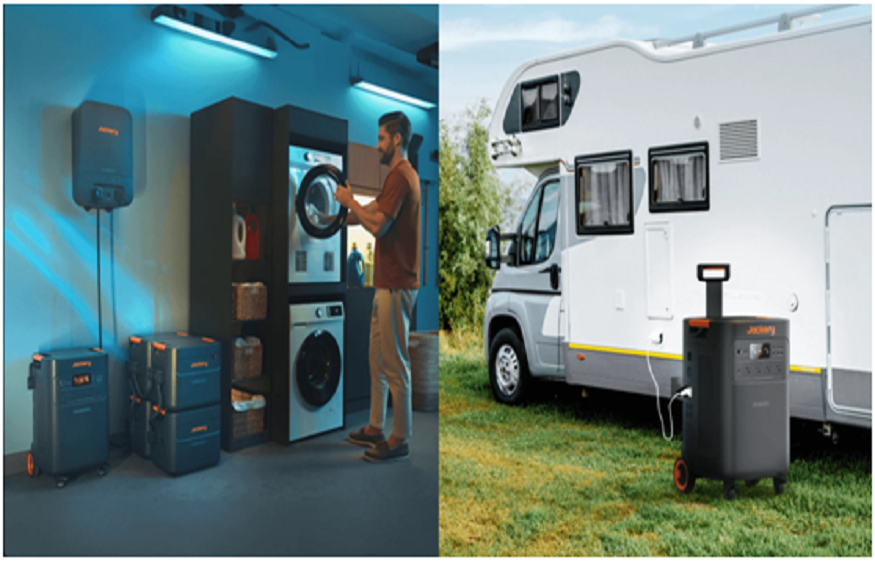
Off-grid and outdoor situations usually demand lighter power. Typically, a 1,000- to 3,000-watt inverter generator is sufficient. This can power essentials like lights, portable fans, a small microwave, or a mini-fridge. RVs equipped with an air conditioner may need a generator with 3,000 to 4,000 starting watts.
When powering a camping trip, quiet operation and fuel efficiency are key factors to consider. So, when deciding on the right-sized generator for your mobile adventures, look for solar-based portable inverter generators designed for RV compatibility.
Scenario 3: Construction and Job Sites
What size generator do you need to work on a construction site? Power tools, compressors, and lighting systems draw significant energy, especially when used simultaneously. Generators must be rugged, reliable, and powerful enough to handle surges.
So, start by listing all tools that will run simultaneously, such as circular saws, drills, air compressors, etc. Depending on the scale of the work, a job site typically requires a generator with 5,000 to 10,000 watts.
Since tools often have high starting wattage, it is essential to factor that in. Additionally, when selecting a unit, the question is not just the power generator size needed but also whether it can run continuously in demanding environments.
Scenario 4: Events and Outdoor Gatherings
Outdoor events like weddings, markets, or festivals need a generator that can quietly and reliably run lights, sound systems, food warmers, and sometimes heaters or fans.
So, what size generator do you need if you are planning an event? A small gathering might get by with 2,000 to 4,000 watts, while a larger event may need 5,000 to 7,000 watts, depending on the equipment used.
Check the wattage of PA systems, lighting rigs, catering tools, and mobile refrigerators or drink dispensers. This will help you avoid power interruptions and keep guests comfortable.
Introducing Jackery: Trusted Name in Solar Generators
After you have the estimated generator size in mind, the next step is to choose a high-performance product. One brand consistently delivers reliable, efficient, and eco-friendly solutions—Jackery. Renowned for innovation and performance, Jackery specializes in solar-powered portable generators ideal for everything from outdoor adventures to home backup.
Here are three models recommended for their excellent performance.
1.Lower-Load Scenarios—Jackery Solar Generator 1000 v2 (1500 W, 1070 Wh)
If you ask, “What size generator do I need for camping, small appliances, or emergency preparedness?” The Jackery Solar Generator 1000 v2 offers an ideal solution.
With a 1070 Wh capacity and 1500 W output, it delivers a 50% boost in power compared to earlier models. It is lightweight (with a portable power station weighing just 23.8 pounds), compact, and perfectly suited for powering small devices like laptops, mini-fridges, lights, phones, and more.
The generator also offers 3 convenient charging options: wall (1.7 hours), solar (8 hours with 2 x 100W panels), and car (12 hours), ensuring you are never without backup power. The built-in UPS (≤ 20 ms) ensures your devices, like computers or fish tanks, stay protected during sudden outages.
2.Medium-Load Conditions—Jackery Solar Generator 2000 v2 (2200 W, 2042 Wh)
If your needs are more demanding and you wonder, “What size generator do I need to power a house or multiple appliances?” the Jackery Solar Generator 2000 v2 can be your answer.
Offering a 2042 Wh capacity and 2200 W output, it powers 99% of household devices, including refrigerators, microwaves, and even network systems.
Despite its powerful specs, its power station weighs only 39.5 pounds and is smaller than other units in its class. Thanks to Jackery’s CTB honeycomb tech and LiFePO₄ battery, it is compact, durable, and lasts over 10 years.
For charging, it supports:
- Emergency supercharging in 1.7 hours.
- Solar using 2 Jackery SolarSaga 200W solar panels in 7.5 hours.
- Standard wall in 2 hours.
- Car in 24 hours
Equipped with smart app control, seamless UPS (≤ 20 ms) transition, and multiple output ports (USB-A 18 W, USB-C 100 W + 30 W), this unit is perfect for people looking for backup generators for their homes.
3. Heavy-Load Situations—Jackery Solar Generator 5000 Plus (7 kW, 5 kWh)
When it comes to whole-home solutions or industrial needs, you are seriously considering, “What size generator do I need to run my house through extended outages?” The Jackery Solar Generator 5000 Plus is your best bet.
With a massive 5-60 kWh expandable capacity and 7200-14400 W output, this system can power multiple heavy-duty devices—from refrigerators and dryers to full rooms—for up to 30 days.
Designed with 0ms UPS switching, it ensures uninterrupted power for essential rooms. You can connect it to your home circuits via a Smart Transfer Switch, offering worry-free, continuous operation during blackouts.
The dual-voltage (120V/240V) capability increases compatibility with both standard and high-power appliances.
Charging is impressively flexible and fast:
- 4000 W solar input for a full charge in 1.7 hours.
- AC (1800 W) in 3.5 hours.
- Solar (500 W x 2) in 6.5 hours
Further, despite its enormous power, it ensures versatile and convenient use thanks to its wheel design.
Solar Generator vs. Other Generators: Which To Choose?
Overall, solar-powered generators are recommended for the following benefits:
- Clean, Renewable Energy Source: Solar generators use sunlight to provide power without emissions, making them an eco-friendly option compared to fuel generators. This means clean energy that supports your daily needs sustainably.
- Quiet Operation: Solar generators operate silently, unlike noisy fuel generators. This quietness is perfect for outdoor and home use, as all your typical appliances remain functional without disturbing your family or neighbors.
- Low Maintenance and Operating Costs: With no fuel or engine upkeep required, solar generators save money on maintenance and fuel over time. This makes managing your household’s average power consumption more cost-effective.
- Portability and Convenience: Solar generators are lightweight and easy to move, ideal for powering your essentials and more on the go or during outdoor activities.
- Safe for Indoor Use: Solar generators produce no harmful fumes, making them safe to use indoors during outages or emergencies.
- Environmental Impact and Sustainability: Using solar generators reduces reliance on fossil fuels, aligning with sustainable energy goals while meeting typical household average power consumption demands.
Wrapping It Up
Choosing the right generator does not have to be complicated. By understanding your power needs, accurately calculating wattage, and considering different use cases, you can confidently answer the question, “What size generator do I need?” However, you will need a reliable provider.
Jackery offers power backup solutions for every scenario. With eco-friendly technology, powerful output, and smart features, Jackery solar generators help you meet your energy needs with ease.